
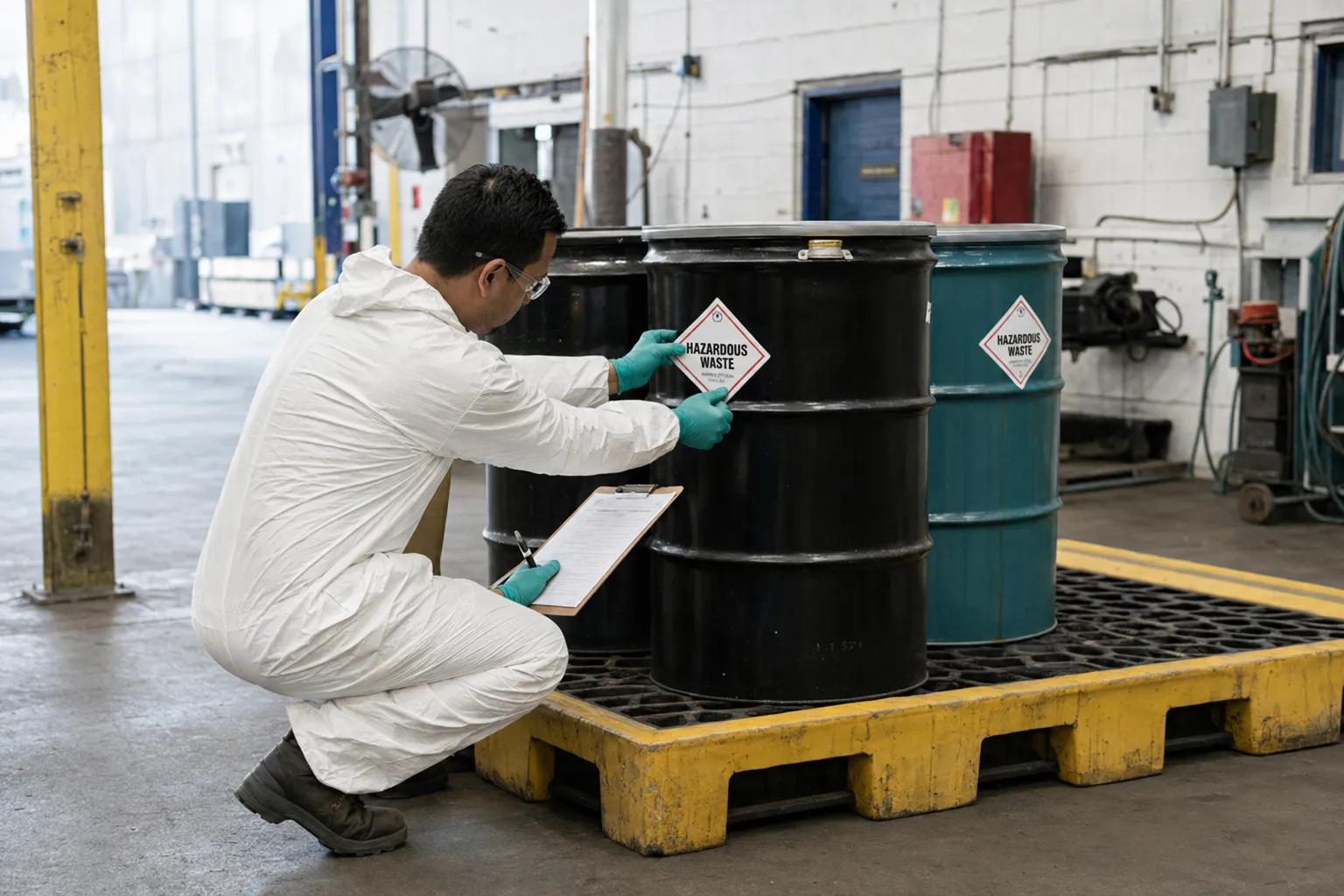
Why Improper Hazardous Waste Storage Can Become a Bigger Problem Over Time
Hazardous waste rarely becomes less of a problem just because it is left alone. A few old paint cans, outdated batteries, damaged equipment, or containers of unknown chemicals may seem manageable when they are first pushed into a corner of a garage, warehouse, or maintenance room. Months later, that same waste can become damaged, difficult to identify, or much more complicated to remove safely.
For property owners, the biggest mistake is often assuming that temporary storage is harmless. Hazardous materials can deteriorate, leak, react with other substances, or create risks for anyone who eventually has to move them. Knowing how to store waste properly—and when to arrange professional disposal—can help prevent a small cleanup issue from becoming a much bigger problem.
Hazardous Waste Can Change While It Sits in Storage
Many hazardous materials do not remain in the same condition indefinitely. Containers can rust, crack, or lose their labels. Liquids may leak, and certain materials can become more difficult to handle as packaging deteriorates.
Temperature is another important consideration. Garages, sheds, warehouses, and other areas without climate control can experience significant temperature changes throughout the year. Heat, freezing conditions, moisture, and direct sunlight may affect both the material and the container holding it.
This is one reason property owners searching for hazardous waste disposal Tampa or other local services should not wait until stored materials become an obvious problem. If you are unsure how long something can be stored safely, it is better to have the material properly evaluated and handled before conditions get worse.
Mixing Different Materials Can Create Unnecessary Risks
One of the most common mistakes is storing different types of hazardous waste together without knowing whether they are compatible. A property owner may place old paint, batteries, cleaning chemicals, electronic equipment, and other materials in the same area simply because they all need to be removed.
The problem is that hazardous waste should not automatically be treated as one category. Different materials may have different storage, transportation, and disposal requirements. Combining them can make identification more difficult and may increase the risk of spills or unwanted reactions.
When arranging hazardous waste disposal in Orlando, property owners should provide as much information as possible about what is being removed. If labels are missing or the contents are unknown, mention that before pickup rather than guessing what the material is.
Poor Storage Can Lead to Property Damage
Hazardous waste does not only pose a concern for people. Improperly stored materials can also affect the property itself.
A leaking container can damage concrete floors, shelving, walls, or other surfaces. In some situations, contamination may spread beyond the original storage area and create a more complicated cleanup. Even a relatively small spill can become expensive if it is discovered late.
Businesses and property owners looking for hazardous waste disposal in Milwaukee may be dealing with materials that have been sitting in storage for years. Before moving old containers, inspect the area carefully for signs of corrosion, staining, unusual odors, or damaged packaging. Avoid opening unknown containers just to determine what is inside.
Waiting Too Long Can Make Disposal More Complicated
Another common mistake is postponing disposal until a property is being sold, renovated, cleaned out, or prepared for a new tenant. This can create unnecessary pressure because hazardous materials may be discovered at the same time as dozens of other tasks.
A better approach is to address hazardous waste as soon as it is identified. Keeping an inventory of stored materials and reviewing it periodically can help property owners recognize what needs attention before a major project begins.
This is particularly important when arranging hazardous waste disposal Jacksonville after a facility closure, renovation, or large-scale property cleanup. Finding and properly managing hazardous materials early can make the entire process more organized.
How to Store Hazardous Waste More Responsibly
If hazardous waste must remain on-site temporarily, keep it in a secure area away from children, unauthorized personnel, drains, and incompatible materials. Whenever possible, keep original labels intact and avoid transferring substances into unmarked containers.
Property owners should also avoid storing hazardous materials near heat sources or areas where containers could easily be damaged. Do not mix materials simply to save space, and never assume that an old container is safe to move without checking its condition.
Most importantly, do not wait for a leak, spill, or renovation deadline to address waste that has been sitting around for months or years. Professional disposal can help determine the appropriate next step and reduce the chance of a preventable problem.
When hazardous waste is no longer needed, proper disposal is often the safest solution for both the property and the people who use it. If you have materials that need to be removed, contact a professional hazardous waste disposal company to discuss the type of waste, its condition, and the appropriate disposal process. Taking action early can help protect your property and prevent a small storage problem from becoming a much bigger one.